Sunday, July 19, 2020

The False Propaganda !

Followed by some, distorted by a few, misconceived and benefited by many by 
What is Hinduism, after all? 
While explaining what it is would take an encyclopedia’s length, I’m here today to tell you what it is not. Many of us and false benefit makers have misinterpreted the religion due to many cultural and linguistic barriers, but I’m here to break those stereotypes. You may be shocked but you will definitely learn, even if you are Hindu. 
Ready? Let’s start.

BY THE NUMBERS, HINDUISM IS THE THIRD LARGEST RELIGION IN THE WORLD WITH MORE THAN 1 BILLION FOLLOWERS

According to latest statistics, there are nearly one billion people that believe in Hindu religion. The number of worshipers of Hinduism will cross 1 billion any time now. At the moment, 14% of world’s population is Hindu worshipers.

And despite the large number, there are still many misconceptions about one of the largest religions in the world. By the numbers, Hinduism is the third largest religion in the world. By age, Hinduism is regarded as one of the oldest, if not the oldest religion. The belief is that Hinduism “consists of thousands of different religious groups that have evolved since 1500 BC in India”. The most notable feature of Hinduism is freedom of belief and practice, all because of the variety of traditions.

Most of the followers are in India, where Hinduism is the dominant religion. Aside from India, Hinduism is common in Nepal and Sri Lanka (among Tamils). After Christianity and Islam, Hinduism is the largest religion.

NOT ALL HINDU PEOPLE ARE VEGETARIANS

One of the biggest misconceptions is that all people that follow Hinduism are actually vegetarians. The reality is that Hindu people practice vegetarianism, but that is exclusive or obligatory. The reason for popularity of vegetarianism among Hindu people is because they believe “animals are sentient beings”. Because of this, Hindu people refuse to eat meat.

However, statistics show that only 30% to 35% followers actually practice vegetarianism. Others treat themselves with occasional meat. What is true though, is that the minority of Hindu vegetarians actually makes the majority of worldwide vegetarians. According to stats, more than 300 million people in the world are vegetarians, and large number of those are Hindu followers.

One of the principles worth mentioning is “spiritual belief of ahimsa”. This principle preaches for nonviolence against all living things. Negative karma follows after slaughtering and consumption of meat products, but not all Hindu people follow this rule.

Humans are not carnivores, nor are they herbivores. Their physiology and instincts place them 100% firmly in the category of omnivores. So everyone's blood is with the essence of meat !

 And thus, you can eat what ever you want !!!

HINDU PEOPLE DO NOT WORSHIP IDOLS 

Let’s group this misconception together, as people like to joke about Hindus that they are idol and cow worshipers. Let’s start with worshiping of idols. You’ll never hear a Hindu say that he/she is worshiping an idol. According to their belief, idols are “physical representation of God”. The idols worshiped by Hindus are different, and chosen because of their representation. For example, when starting a new business, Hindus worship Ganesh, who is the elephant god representing success. The irony is that even Western people buy elephant figurines for success.

And remember that the actual Hinduism follows a fact that God is Every where !!!

HINDUISM IS NOT AN ORGANIZED RELIGION

Let’s clarify first what an organized religion actually is. Organized religions have one particular leader of the faith. For Muslims, that is Allah, a singular representation of God. Christians believe in the Holy Trinity of God, which is God the father, Jesus Christ his son, and the Holy Spirit. Buddhism has Buddha. Hindu people have no particular leader of the faith, meaning that their religion is not organized.

Hinduism has never been powered by any sort of empire. Hinduism was never organized, and never in the history of the religion, has it spread through political influence or religious teachings. Hinduism has evolved into a list of teachings. There is no founder, no specific origin date, and no leader of the faith.

And that's why the religion went into many hands, and many people made rules so as to benefit themselves !!!

HINDUISM DO NOT ACTUALLY SUPPORT CASTE SYSTEM

Long ago, back when society was divided into upper and lower classes (aristocrats and slavery), a group of upper-class priests and rich people in India decided to create a new social hierarchy system. The system was called the caste system, and it is one that still holds ground today. The tragic is that the caste system has been associated with Hinduism, not the culture. Caste system was a cultural brainchild, never a religious rule. The discrimination that comes from caste is rooted in the culture of India.

Modern Hindus argue that caste-based discrimination should not be religiously sanctioned. According to them, the discrimination is not intrinsic to Hinduism.

Ask yourself this question -

God is responsible for every birth and death - and if god really wanted the so called untouchables to be untouched , why he will allow their birth ?

In my opinion the caste system was created or caused for  and by some groups to be benefited out of it. It doesn't have any religious background !!!


And  let us now discuss who is "GOD"?

Theists (believers) argue that God must exist because we exist. Somebody must have made this elaborate universe. Scientific believers (who claim to have proved the existence of God using scientific enquiry) argue that the universe could have come into being only in a very specific situation. Think from the cosmological perspective of the Big Bang etc. There is a specific set of values of universal constants in Physics due to which it was possible for galaxies to form, stars to exist, planets to revolve, life to appear and ultimately for you to read this answer today. Someone must have tuned these for us to exist.

Atheists counter by saying if everything that exists requires a creator then who created God? As per them there are far too many Gods across the world and either all are imaginary or all are true. But they all can't be true because they contradict each other each claiming to be the One True God. Hence all are imaginary. The onus to prove that God exists should fall on the able shoulders of theists because atheists can not prove a negative.

For a break let me ask you some questions,

When did time begin?

Did we invent Math of did we discover it?

Where does your thoughts go when its forgotten?

LOL ! I know you are in confusion now. Let us continue......

  • To understand God you need to understand religion or more precisely the origin of religion. From time to time in our human civilization there have been great leaders who for the sake of good order have given their people a code of how human beings should live. 

  • Imagine yourself living in a lawless land overcome with anarchy and misery. No respect for the law, wars and rapes and all sorts of nefarious activities abound. You want to change it all. So you make some rules for the people to follow. 

  • Simple common-sensical stuff like “Don't be evil, be good” etc. So you want everyone to obey your laws. You go to the people and tell them to obey and they tell you to put your laws where the sun don't shine. 

  • So you can try to become a tyrant and then make people obey you. Easier said than done. Even if you could, it's an extremely temporary solution - what after you die? 

  • People need fear of someone to keep them on the righteous path because the righteous path is most of the times the most difficult one. Parents do it all the time with kids “Go to sleep little one or the Boogeyman will come and getcha”. 


Lord Krishna didn't give a citation for Geeta !!!

Learn the good and leave the bad ....

To me God’s existence is self-evident 

If you need his Personal Form , Do good to People and see GOD
If you need him Formless, Do love People to see GOD
Thanks For Reading

By
Vamsi Krishna Mutyala
vamsim88@gmail.com


Wednesday, July 15, 2020

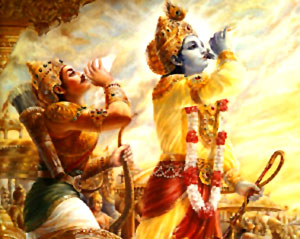
Why did Krishna choose Arjuna instead of any other Pandava to teach Bhagavad Gita at the war front?

In my previous blog we had discussed Why did Krishna choose Arjuna instead of Karna,Drona or Bhishma ?
As Someone asked me  But why Arjuna alone gets this privilege among the Pandavas?
And here is the answer.......
Nakula and Sahadeva were less significant characters amidst the Pandavas. They were not shown to be too aggressive nor too inquisitive; they were rather duty minded and content to do whatever Yudhishtra ordained them to do. So, we can say, Krishna perhaps discounted them.
Now, we are left with Yudhishtira, Arjuna and Bhima.
As regards Yudhshitira, we was already a knower of dharma. He was basically satvic, knew pretty well about what is dharma and adharma and he was spiritually quite evolved. He does not really need a sermon.
As regards Bhima, he was thirsting for the war. He was just waiting for the time to plunge headlong into the war. Animal impetuosity was still dominant in him. Such a man was not not fit for receiving the teaching of or practicing any form of yoga.
But Arjuna’s personality stood somewhat in between these two characters. He was more evolved from animal tendencies but not to the level of knowing the higher realms of spirituality and dharma. He is like a normal man where both virtue and vice are intermingled, who has nagging doubts about what is right or dharma and what is wrong or adharma. Thus Arjuna represented the normal man who is fit for receiving the evolved subject of the Yoga for his spiritual betterment.
An Avatara Purusha, is interested in the welfare of all, but they would rather exchange pleasantries with you and take care of your needs when your purpose of going to them is just for mundane existential needs. Only when someone genuinely surrenders and seeks sincere guidance and advice from them on the matters of dharma, God or spirituality, they would opt to teach them by donning the role of a guru.
All along, Arjuna had more of a friendly relationship with Krishna; but when he saw the potential destruction the impending war was going to cause by way of annihilating his own blood relations and teachers, he got scared and jittery. It was at that point that he surrendered with humility to Krishna as his guru and sought his guidance. None of the other pandavas were in such a mental turmoil or confusion as Arjuna was. That’s how Krishna took up His Guru bhava to teach Arjuna the Bhagavad Gita.

Compiled By
Vamsi Krishna Mutyala
vamsim88@gmail.com

Tuesday, July 14, 2020

Why did Krishna choose Arjuna instead of Karna,Drona or Bhishma?

    The Mahabharata is one of the greatest literature’s in the world. No other work brings out the complexity of human problems in such a profound and entertaining way. It shows us the application of philosophy when it comes to deciding between the right and wrong in such cases where the answer is not straightforward.
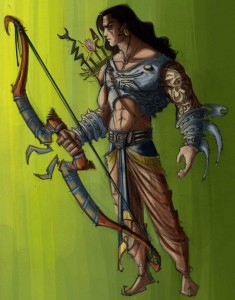
    Four of the most striking characters in the Mahabharata are Arjuna,Karna,Drona and Bhishma  . These men were perhaps the four greatest warriors of the era and were also well learned and had firm principles by which they lived.
    They lived their life by different values and their lives came to very different ends. The Mahabharata shows that all four men were great in their own way, but three of them failed in doing what is truly right and therefore came to futile ends, their lives not serving the greater good.
    Out of the four characters, Arjuna is the character who stands out as the hero who future generations of Hindus admire the most. The other three are remembered as tragic heroes. Their names are not associated with the same awe and respect as that of Arjuna. They all met sad deaths on the battlefield, fighting on the side of evil despite knowing in their hearts that they were doing wrong
    There is a fundamental difference in the outlook and character of these four great men that was responsible for their different outcomes.
Karna

    Karna was a great warrior, in many ways greater than Arjuna. They may have been equal as archers, but physically, Karna was by far the stronger of the two. And even in sticking to one’s principles, Karna appeared more steadfast compared with Arjuna. But in Karna’s life there was one fatal flaw. He made his friendship and loyalty to Duryodhan higher than anything else, even higher than right and wrong, and even higher than God. While loyalty is a great value in such cases when it overrides a sense of dharma and even the direct calling of the Divine in the form of Shri Krishna, such loyalty leads one to a tragic end.
    Karna used all his strength to serve his friend Duryodhan, without even one selfish thought for himself. However, his loyalty was so blind that he would even follow his friend when he was doing something totally wrong, selfish and harmful to others. This shows that loyalty to another person can lead even a great man to a tragic end. Dharma, and the call of God, must always be greater than loyalty to another. Karna knew what he was doing was wrong and paid the price for it.
    Karna put loyalty to Duryodhan as his highest loyalty. His tragic story warns us to choose loyalties wisely. Only Krishna deserves such unflinching loyalty.
Bhishma
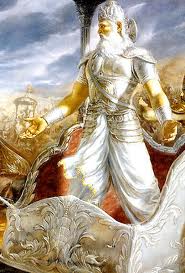
    Bhishma was another person who never performed a selfish action in his whole life. He was mighty, learned and respected. But he too ended up fighting on the side of adharma, and came to a tragic end. He was actually an impediment to the establishment of a righteous kingdom. Why? Because he put his personal oath on a pedestal and made it the focus and obsession of his life.
   That oath was that he would unquestioningly follow and do the bidding of whoever was the king of Hastinapur (Delhi). This vow, he would never break as long as he lived, even when it involved fighting his own beloved nephews who he knew had done nothing wrong.
    Sticking to a vow is important, especially today when people make promises and break them the very next day (or even the very next second). But the Mahabharata demonstrates that if your attachment to a personal vow stops you from doing what is blatantly right, and ends up making you serve evil, such a vow should be discarded and set aside.
    Bhishma put his personal vow above anything else, even when that vow became an instrument of evil. He disregarded Krishna’s advice, which was that to drop the vow for the greater good.
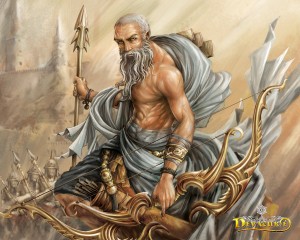
Drona
    Drona was an employee of the king of Hastinapur, who happened to be Dhitirashtra, the father of Duryodhana. He was employed to teach all the princes of that kingdom in the art of warfare and statecraft, and was considered the very greatest teacher of the era. For his services, he was remunerated handsomely. Before he got this job, he was very poor and therefore was very grateful to the King for employing him.
    When Duryodhan was doing wrong, Drona was fully aware of it. On some occasions he even tried to stop Duryodhan, at which Duryodhan would say: “Do not bite the hand that feeds you.”
    When the battle finally dawned, Drona fought on Duryodhan’s behalf and was eventually slain in a scheme engineered by Krishna. Drona, despite being an outstanding warrior, and well versed in morality, put his loyalty towards his employer before the more important and fundamental question of dharma. Despite knowing better, he never quite had the guts to just leave and tell the king – “Enough is enough, what you are doing is wrong, I will not support you anymore.” He was too afraid of being called ungrateful.
    Drona put his loyalty towards his employer above the bidding of Shri Krishna who tried to tell Drona not to keep supporting the side of evil just because of his loyalty to his employer.
Arjuna
    Arjuna was a great man. Yet he had weaknesses that were actually absent in Karna, Bhishma and Drona. He was in some ways foolhardy, saying and doing several stupid things that could have landed his brothers and himself in serious trouble.
    For example, at one point, Arjuna had made a vow that he would take the life of anybody who insulted his ‘Gandiva bow’, which he was exceedingly proud of. During the Mahabharata war, it happened to be Arjuna’s eldest brother and leader, Yuddhistir, who dealt the fatal insult.
    Arjuna drew his sword and was about to kill his own brother, and was restrained only by Krishna’s presence. Instead of killing Yuddhistir, Arjuna instead insulted him in public. But then, Arjuna felt bad for insulting such a virtuous person as Yuddhistir, and said that he would commit suicide as there was no point even being alive after doing something so vile as insulting his own brother in public! Once again, it was only Krishna’s presence which restrained Arjuna. Krishna eventually talked Arjuna out of suicide, but Arjuna was sad that he had not kept his own word,and felt very bad. Krishna gave Arjuna a loophole. According to dharma, praising yourself in public is a sin that is as bad as one’s own death. So Krishna said to Arjuna that just praise yourself in public, and your vow will be fulfilled. And thus were the lives of both Arjuna and Yuddhistir saved.
    Yet despite this foolhardy streak in his character, Arjuna is the one who is etched upon the heart of humanity as the ideal to which to aspire.
    This story illustrates that while Arjuna was far from perfect, he had one over riding quality which sets him above and apart from the others. To Arjuna, it was Krishna’s words that were absolute.
    He would follow Krishna’s words even at the expense of other principles or promises that he held dear. Therefore he had the grace and favour of Krishna’s guidance throughout his life.
    Therefore, Arjuna’s fate was to be the hero of the era, and the instrument of God in being the restorer of dharma to society, rather than a tragic figure who ended up wasting their huge life potential in fighting on behalf of a fake cause. Arjuna put Krishna as his highest guide and ideal, and despite his faults, stands out as the most successful and glorious of the four.
Conclusion
    The comparison between Karna, Drona, Bhishma and Arjuna shows us that while we can admire a person’s loyalty to a friend, loyalty to their employer and dedication to their principles or promises, all of these things must never be allowed to become an obstacle in doing what is truly for the benefit of the greater good. Krishna, the divine guide, will always shower his grace on people who will put Him first, and thus we remember Arjuna as the true hero above any of his contemporaries.

Compiled By
Vamsi Krishna Mutyala
vamsim88@gmail.com

Sunday, July 12, 2020

The Only Kaurava Who Stood Against The Humiliation Of Draupadi

He was the son of Dhritarashtra and Gandhari. He was one of the most reputable Kauravas. And no,  I am not talking about Duryodhana or Dussasana.
While reading about intriguing tidbits from Mahabharata today, I came across a character, who, mythologically speaking, despite being a Kaurava, was a ‘true’ warrior. Moreover, far above the ground games of power and pride, he, unlike his brethren, was seen as an ardent follower of ‘Dharma’.

The name is Vikarna.

In Mahabharata, there are two particular instances, which depict the character of Vikarna, perfectly.

1. He stood against the Game of Dice and the shameful act it led to


This was clearly not taken well by Duryodhana who then asked Vikarna to quit voicing his opinions.
Nothing helped. Even the leaders who were considered the wisest of heads did nothing to stop the evil and save the victim. However, Vikarna emerged as the one who wouldn’t shut and see the wrong brewing before his eyes.
In a world outside Mahabharata, when a girl is humiliated and harassed before a mute mob, the person who dares to pull her to safety is harassed too.
Vikarna’s heroic act is documented in the book ‘Vikarna’ which was released in March of this year. Authored by journalist Ch. Srinivasa Rao, the speakers at the book launch were quoted saying,
“Vikarna, one of the 100 Kaurava brothers in the epic Mahabharatam, is the right role model for youth. He is worthy of emulation in the present context of rising atrocities against women,”

2. His encounter with Bhima during the Kurukshetra war

Despite harbouring apprehensions, he fought the Kurukshetra battle for his brother Duryodhana.
On the fourteenth day of the war, Arjuna in progress with implementing his vow of killing Jayadratha before sunset was navigating the chakravyuh of Drona. In a counter action, Kauravas had formed a defence to keep Jayadratha safe from the upcoming danger. Bhima, in order to assist Arjuna, pierced fiercely through the defence. At this, Duryodhana gave Vikarna the responsibility to check on Bhima.
Bhima, although had vowed to kill all the 100 Kauravas, didn’t want to fight Vikarna and expressed his desire before him. Bhima knew Vikarna as the man of dharma, and hence his gesture.

Image source

To this, Vikarna replied to Bhima that despite knowing that Kauravas fate has defeat written over it since Lord Krishna was on the Pandavas side, he couldn’t defy the orders of his brother.
Bhima reminded him of the dice game where Vikarna stood a hero alone, to which Vikarna replied:
“That was my duty then, and this is my duty now. Fight me, o son of Vayu!”
Following the dialogue, Bhima killed Vikarna in a mace fight, and later lamented,
“Alas, O Vikarna, you were just and knew what was dharma! You fought in loyal obedience to the call of duty. Indeed this battle is a curse upon us wherein men like you…have had to be slaughtered.”

He was also a great archer

Third in stature to Duryodhana, he was one of the best warriors Kauravas had. In fact, it is believed he was the only thoroughly skilled one. However, his skills went unnoticed because of the other twisted personalities from the Kaurava clan. His attribute of a great warrior is mentioned in the Bhagwad Gita’s eighth sloka.
They compare him with Kumbhakarna from Ramayana
There was one thing common between Vikarna of Mahabharata and Kumbhkarna of Ramayana. They both followed their brothers directions despite bearing doubts.


Compiled By

VAMSI KRISHNA MUTYALA

8500312348

vamsim88@gmail.com

Saturday, July 11, 2020

The Only Kaurava Who Fought FOR The Pandavas

Pleased with the hospitality offered by Gandhari, sage Vyasa gave her a boon.
Gandhari expressed her desire to give birth to 100 children, and over the course of about two years, her desires were fulfilled in an unusual way.
Duryodhana, “the unconquerable one” was the first to appear, and his first cries were given company by the howling of jungle beasts. The ill omen had taken place.
However, in the clan of the Kauravas, there were also righteous, whose goodness although shadowed, surpassed the evil.

Yuyutsu was one such Mahabharata character, who although a Kaurava, had a good knowledge of the good and the evil. He never betrayed his consciousness and stayed where the light was.


He was one of the 102 children of Dhritarashtra

Yes, contrary to a popular belief, Dhritarashtra had more than 100 children. The tale of this Kaurava’s birth is as unique as himself. Yuyutsu was a half-brother to the rest of the Kuru brothers. When the trials of Gandhari were failing at producing a child, a fearful Dhritarashtra produced a child with a Vaishya daasi named Sugadha, and so was born Yuyutsu. He was born on the same day as his other 100 Kuru brothers and a sister Duhsala.

A righteous Kaurava, he chose to play it smart…

While there was a handful of Kauravas who were aware of the evil brewing on their side; in the name of dharma, friendships, and favours, they didn’t act on their inner calling. Yuyutsu, however, was a little different.
Since Mahabharata was called the righteous war, both sides (Pandavas and Kauravas) were given absolute freedom to choose any side they wished. Yuyutsu could see Kauravas going down. He didn’t turn a blind eye towards the fraudulent and evil practices of Duryodhana. He, very smartly, did what had to be done.
He became an informant for the Pandavas that even saved Bhima’s life among other benefits
He provided them crucial information centering around Duryodhana’s cunning plotting and schemes, thereby helping Pandavas substantially. One significant way he helped them definitely has to be of saving Bhima’s life. One of the many Duryodhana’s evil plans included poisoning of water to kill Bhima; a plan that didn’t work out, thanks to Yuyutsu alarming the Pandavas about it.

He sided with Pandavas before the onset of the Kurukshetra War

Possessing the ability to fight 60,000 warriors simultaneously, he was one of the Atirathis among the Kauravas. But, he chose to fight for the right with the right, and hence, took part in the Kurukshetra war from the Pandavas’ side. His ideologies did bore fruit and eventually, he became the supervisor of Hastinapur.
Yuyutsu was one of the 11 who managed to survive the war.
Years after the war and prior to the Yadava crisis, Yuyutsu found the city falling apart. The citizens would pick up fights with each other and live in depravity. When Yuyutsu desired to know the cause, they would hurl abuses at him and call him a traitor and a kinslayer. But, who said the right path was easy anyway?
At the start of Kali Yuga, when the Pandavas chose to retire and Krishna departed; Yudhishthira, the lead Pandava and a former king of Indraprastha and later of Hastinapur, handed over the charge of supervising the kingdom of Hastinapur to Yuyutsu. Parikshit, the grandson of Arjuna, on the other hand, was made the king.
 Both Yuyutsu and Vikarna (another Kaurava) knew of Duryodhana’s evil scheming. However, what set them apart was Vikarna’s decision to stay loyal to his brother. Whereas, Yuyutsu’s perception of dharma was to stay with the right, regardless of the adversities.

He left behind an epic example of morals and righteousness through the world of mythology.

Compiled By 
VAMSI KRISHNA MUTYALA
vamsim88@gmail.com

Sunday, July 5, 2020

What Happened After The Mahabharata War ?

    Little knowledge is a dangerous thing. For all the love and respect we have towards the great Indian heritage, we can at least ensure that we have maximum knowledge about them (maximum, for would take an entire lifetime to have complete knowledge) in order to pass on to the coming generations. We’ve all grown up hearing and understanding the story of Mahabharata, but most of our knowledge about the epic is limited till the completion of the great war of Kurukshetra. What happened after the war was done? There were still prominent characters from the side of the Kauravas – such as Ashwatthama, Gandhari and even Dritharashtra who lived on. What happened of them? They say, the greatest agony in the world after a war lost is a war won. How did the Pandavas sustain after surviving the great tragedy of Kurukshetra?
  
  As it was aimed, the Pandavas were indeed crowned the rulers of Hastinapur, with Yudhishtira being the King. However, the war and the loss of 100 sons had left Gandhari devastated, and she, in no mood to understand the cause behind the death of her sons or forgive the Pandavas for performing their duty towards fate; curses the annihilation of Krishna and the dynasty. The curse took 36 years to materialize, until which the Pandavas ruled Hastinapur peacefully. The 36 years marked the last phase of Dwapara Yuga, after which mass destruction and Kali Yuga as we know today followed.
As for Dritharashtra, the blind father of Kauravas, he tried to sustain himself despite of the agony within Hastinapura. While everyone treated him with consideration and respect, it is said that Bheema, the second of Pandavas, did not find that necessary. He would often keep reminding Dritharashtra how ruefully his sons were killed in battle, and how they deserved the fate they faced. This made Dritharashtra feel disrespected, owing to which he chose to leave the palace and spend his last mortal days in isolation. However, the blind king was not let go alone, for Gandhari, Sanjaya and Kunti (the mother of Pandavas) accompanied him to a forest. It is believed, all four of them chose to part with their mortal forms in a wildfire that engulfed the forest eventually.
    Another character that survived the war was Ashwatthama, the son of Dronacharya who had supported the Kauravas during Kurukshetra. In fact, this man had been so merciless that even after the commencement of the war; he facilitated the cold blooded murder of numerous members of the Pandava camp through treachery. Enraged by this act of his, Krishna had a fierce conversation with Ashwatthama where it was learnt that the warrior was not afraid of death. As a result of that understanding, Krishna cursed him with immortality; and there have been multiple instances recurring on media that validate the possibility of Ashwatthama still being alive. In fact, he is one of the seven immortals referred in the Indian heritage. Regardless of the misdeeds associated with his identity, Ashwatthama is considered to be a blessing of Lord Shiva, and his warrior form is worshipped even today.
    As for Lord Krishna himself, nothing saved him from the curse of Gandhari. After 36 years of war, unrest began inciting itself in Dwaraka, his home town. Sensing that end is near, Krishna tries migrating his entire population of subjects to Prabhasa, where a revolt breaks out. In the same process, a hunter shoots Krishna an arrow which leads to the mortal end of Lord Krishna, and he regains his original form as Lord Vishnu. Most versions of Mahabharata also believe that it was Ravana who incarnated as the hunter, and was destined to kill Krishna owing to the previous legacy of Ramayana.
    The Pandavas weren’t late in sensing the end of Dwapara Yuga. Passing on the crown to Parikshit, Yudhistira and the rest of the Pandavas along with Draupadi begin walking (literally) towards heaven. They are fall off the mountain sequentially on the grounds of their sins in life, beginning with Draupadi. Yudhistira’s sins were so little that they earned him merely a trail through hell where he had to withhold the sight of his wife and brothers endure dire treatments. It all ends with the reference that all Pandavas and Draupadi unite in heaven, after their sins are avenged.
    It’s as beautiful as a fairytale, yet as intense as the great epic we know it to be. Mahabharata has enchanted us as children, as adults and as elders, and will always continue to. It isn’t simply that they say Indian heritage is greater than any knowledge the world can claim to have.

Compiled By
Vamsi Krishna Mutyala
vamsim88@gmail.com

Sunday, June 14, 2020

Meenakshi Sundareswarar Temple - Mathurai

The Adore - Meenakshi Amman

    We all read about Lord Shri Rama, a prince from North India, who went to the southern tip of India. But when was the last time you heard of a queen who traveled from Mathurai in the south to Kailasa in the North to find herself a groom. That princess was called Thadaatagai, more popularly known as Meenakshi, she whose eyes are as shapely as the contours of a fish.

    The temple is one the grandest in Tamil Nadu, spread over 14 acres with 12 large gateway towers and 33,000 icons. There are 4 nine-storey gopurams (outer, raja), 1 seven-storey gopuram (Chittirai), 5 five-storey gopurams, 2 three-storey, and 2 one-storey gold-gilded sanctum towers. The temple itself is an architectural wonder and if you climb on the South Tower, you can see the entire city of Mathurai. In this city you will not get permission to build a structure taller than the Gopuram.


The Aerial View of  Meenakshi Sundareswarar Temple - Mathurai


LEGEND

    Lord Indra who is always in a mind that no one else should be powerful than him, Identifies a demon praying for Lord Bramha with the interest of acquiring some powers. With no other thought, he kills the praying demon in a fear that he will become powerful.

    With this cruel act Lord Shiva curses Indra to have a normal human life and to wander in the universe. This he did, without finding relief till he came to forest in South of India the Kadambavanam full of with Kadamba trees, where suddenly he found his burden removed. Being surprised at this he commanded search to made around and discovers a svayambhu linga in the midst of the vanam (forest) and gets vindication from the curse. He gets Golden Lotus flowers from the near by Pond (Pottramarai kulam or the Golden Lotus Pond now) pray to the Linga and returns to the Swargh Lok. King Kulasekara Pandya the then ruler, in his dreams gets the order to construct a temple over the place where Lord  Indira worshiped the svyamabhu Linga through Lord Shiva himself. Kulasekara Pandya cleared the forest and constructed a temple, with Airavath the vehicle of Lord Indira as its base. ( Devotees can see that this temple has Lord on the Indira’s vehicle, which in a way verifies this legend.). A city was soon planned with the temple as its centre. On the day the city was to be named, Lord Shiva is said to have appeared and drops of nectar from his hair fell on the town. So, Mathurai which has rich historical background was named Mathurai- Mathuram meaning sweetness in Tamil.

    After Kulasekara Pandya, Malayadwaja Pandya succeded the kingdom. Malayadhwaja and his consort Queen Kanchanamalai with ardent devotion and prayers were blessed with 3 year old girl child with 3 breasts who came out of the pious fire with the blessings of Lord Shiva. However, the girl had three breasts and it was prophesized that the third breast would disappear when she met her husband. She was named as Thadaathagai and was raised as a son, taught the arts of war and grew to be the next ruler of Mathurai. She was well trained in the 64 sastras and all disciplines required for her to rule the kingdom wisely.

    She waged war and conquered Brahma's Abode - Sathyaloka, Vishnu's Abode - Vaikunta, and Devas' abode - Amaravati. She proceeded to attack Shiva's Abode - Kailash where she defeated Shiva's army and Nandi, Shiva's celestial bull. As soon as she came face to face with the Lord, she bowed her head and her third breast vanished immediately. Thadaathagai realised she was Parvati reborn.
    This phenomenon was followed by the realization that Shiva was to be husband. She returned to Mathurai as a beautiful women with beautiful eyes likes fish and so named as Meenakshi (Fish eyed one). Azhagar (Who was present here in the form of Lord Vishnu as he was late for the marraige) , gave Meenakshi, his sister to Lord Shiva who came as Sundareswarar to Mathurai in the month of Chaithra. The pair proceeded to rule Mathurai for many years as Sudaresa Pandian and Meenakshi.

    The Couple had a boy named Ukkira Pandian (as a form of Subramanyan) and was the heir to the throne. After that, both assumed the forms of Goddess Meenakshi and God Sundareswarar, and became the reigning deity at Meenakshi Sundareswarar Temple.   

Chaitrai Festival or Meenakshi Thiru Kalyanam

The wedding of Meenakshi with Sundareswarar (Lord Shiva) was to happen in Mathurai. Alagar, the brother of Meenakshi, was invited. He started on a 20 km journey from his abode at Alagar Hills towards Mathurai. Alagar decided to travel disguised as a robber, to protect himself and his belongings. At times, he had to hide, to avoid getting arrested by soldiers. This and the dense forest of Alagar Hills delayed his journey further. When he was crossing Vaigai river, he learned that his sister's wedding was over. This made him furious. To pacify, Meenakshi and Lord Shiva came to Vaigai river. He chose to give all the gifts that he carried, to Meenakshi and Sundaraswarar in a Mandapam in the middle of Vaigai river, and returned to Alagar Hill without entering Mathurai.
The following are the list of events in Chithirai festival-

Kodi Yetram

During this event the chief priest of Meenakshi temple will hoist the holy flag on the Dwajasthambam(Flag post) of the temple. This event declares the long event open. The flag will stay on the flag post until the end of the festival..

Pattabisekam

Pattabisekam is coronation ceremony. Meenakshi is crowned as the queen of Mathurai on this day and she will rule the Pandya Kingdom for the next four months and after that her husband Lord Sundereswarar will be crowned as the king of Mathurai for the next eight months.

Dikvijayam

After Goddess Meenakshi is crowned as the queen of Pandya kingdom she went into war with all the countries in the world and conquered the whole world and she went to Kailasham (The Place of Lord Shiva in Himalayas) to conquer it. But, on seeing lord shiva on the battlefield she fell in love with him and married him.

Meenakshi Kalyanam

Meenakshi kalyanam is the wedding celebration of Goddess Meenakshi and Lord shiva as Sundereswara in Mathurai. On the day of Meenakshi Thirukalyanam, devotees get up at sunrise and reach the Meenakshi Mathurai temple. After taking a holy dip in the Golden Lotus pond, they wear clean clothes. Goddess Meenakshi is first worshipped by the traditional methods, following which prayers are offered to ‘Viboothi Vinayakar’. On this day devotees sing devotional songs and bhajans. It is also considered auspicious to wear the holy ash, known as ‘Uthiraksham’ while entering the temple premises. Devotees also carry fruits, coconuts and incense sticks to offer to their lords. Inside the temple the idols of the Gods and Goddesses are decorated with beautiful silk clothes and floral garlands. Not only is this, on the day of Meenakshi Thirukalyanam the entire temple decorated as a bride. There are nearly 50 priests in the Meenakshi Mathurai temple who perform the puja rituals and special prayers. The main priests in the temple perform the ritualistic wedding ceremonies. At the completion of the event, magnificent idols of Lord Sundareswarar and Goddess Meenakshi Amman are taken out in huge processions on the streets in the ‘Pushpa Pallakku’ and ‘Yaanai Vahanam’.
Significance of Meenakshi Thirukalyanam: Meenakshi Thirukalyanam is a part of the renowned ‘Chithirai Thiruvizha’ celebrations. This festival is observed during the month of ‘Chitirai’ in the Tamil calendar. Chithirai Thiruvizha is an annual event celebrated with great pomp and show in Mathurai in the month of April, as per the Gregorian calendar. It is known to be the world’s longest celebrations that last for a period of one month (30 days). Of this, the first 15 days are dedicated to Goddess Meenakshi (an incarnation of Goddess Parvati) and the remaining 15 days is celebrated for Azhgar, who is known to be a form of Mahavishnu. Azhagar is the elder brother of Meenakshi and he tried to visit Mathurai to attend the marriage ceremony of Lord Shiva and Meenakshi.

Chariot Festival

Chariot festival or Ther Tiruvizha or Rathotsavam is performed the day after Meenakshi kalyanam. The King and Queen of Pandya Kingdom Lord Sunderaswara and Meenakshi come to see their subjects in a well decorated chariot. It attracts many people in the Masi streets of Mathurai as viewers.

Ethir Seva

Part of the Chithirai Thiruvizha of Lord Kallazhagar temple at Azhagar Koyil, the ‘Ethir Seva' began on the fourth day of the festival. On this day, Azhagar change his appearance as Kallar (Kallar vedam) when he travels via Kallar Nadu and enters Mathurai city and the people of the city welcome him.

Alagar Vaigai Elenthuarulal

After the holy marriage of Meenakshi, her brother tries to come to the marriage. Lord Azhagar comes from Azhagarkoil to Mathurai slowly and by making couple of stops on the way. It is considered that when reaching the Vaigai river bank, he hears that marriage is over, so he gets angry and returns to Azhagarkoil after giving the gifts to Meenakshi and Sundereswarar and this event happens in a mandapam in the middle of river Vaigai.
The Chithirai Festival

VERITAS
# Why did Thadaathagai had Three Breasts?

      The condition of having three breast is known as Polymastia. Polymastia is a symbol of Veneration (Greek Goddesses Artemis can be seen with Ploymastia), and full of pride bordering manliness, as a majestic ruler.


Thadaathagai with 3 breasts

#  Why Meenakshi Amman's Body is Green Toned ?

     Meenakshi amman is said to have a dusky complexion, an indication of her Dravidian origin. And when dusky women apply turmeric on their faces (common practice for women), they get a greenish tint. And that's why Meenakshi amman is shown green. The current Idol of amman is made out of Emarald stone (Green in Color).


# What is the Significance of the Parrot in Meenakshi Amman's Hand?
      
     According to Hindu Mythology Parrot is a symbol of Love or Kama and Knowledge. Meenakshi amman is well known for her scholastic works and thus the parrot on her right shoulder denotes her wealth of knowledge. According to sages parrot is a bird containing a specific form of vedas as people who want good knowledge in vedas can worship here on wednesday, navami and karthigai star.

The Green Body of amman & The Parrot on her right Shoulder 
# The Golden Lotus  Pond or Potramarai Kulam - Why it is Free of fishes? 

       According to the legend, Once a Heron on its way to fly, Reached the Potramarai. Knowing this is a holy place, he continued for one patsham (or Fifteen days) to bath in the tank; at the end of which a fish of its own accord leaped out on to the bank, and  with strong instinct urged the Heron to devour its prey; but it recollected that the place was holy, and considered that severe punishment would follow it therefore abstained; and Siva now visibly  appeared, asking what gift it desired? The Heron said , "Let me lay aside this body, and be received into your paradise; In order that all my species may be kept away from sin, let there be no fishes, frogs or anything that lives in water, produced in this tank." This requests were granted; and hence to this day the Potramarai produces no living thing.
     
    Even now the temple tank has no fish and the festival commemorating giving mukthi to the stork still takes place at the temple during the Aavai Moola Thiruvizha every year.
       In 2016,  a rare incident took place in temple premises. A Strok came to the Pond; stood on one leg for five long days and finally attained moksha. The Body of the Strok was burried in the temples's Gosala.


         The great Mathurai Sangam was born on the sangam plank which can be seen in this pond. It was believed in ancient times that the worthiness of any new literature can be judged by placing the book on the surface of the plank. The poor quality literature would sink while the scholastic ones would remain afloat. 

The Golden Lotus Pond
# The Unusual Marriage Scene

       In Hindu Marriages generally we see the Bride hand will be given to the Bridegroom. But  in Meenakshi Thiru kalyanam (The Marriage of Meenakshi and Sundareswarar) Azhagar takes the hand of Sundareswarar and give to Meenkashi. This can be seen in the sculptures in the temple. This event symbolizes the power of Meenakshi through which Feminism is highlighted here.

The hand of Sundareswarar being given to Meenakshi


# The Altered Leg of Natarajar at Velliyambalam
      
      Generally when we see the idol of Lord Natarajar, The god of dance, in his dancing posture of TANDAVA; He is surrounded by a ring of flames, standing on a lotus pedestal, lifting his left leg  and  balancing / trampling upon a demon. The special thing one can notice here, about the Natarajar idol in silver hall that unusually the lord stands on his left leg and raise the right one. 

        According to the ThiruviLaiyaadal puraaNam, there was a Pandya king who was grief-striken because of this. He felt that Nataraja has been standing on his right leg for eons of time. He prayed ardently to Nataraja to shift his stance and change his posture. He wanted to Nataraja to stand on His left leg and life up and throw across His right leg.

    Because of his prayers, Nataraja appeared and hearing the Pandya's plea, shifted his legs. He stood on his left leg and lifted his right leg and danced thus.
General Depiction of Lord Natarajar
Mathurai Natarajar
#  Painting of  Rotating 3 Dimensional Siva Linga
    

We can see a marvellous painting of the siva linga on the roof inside the temple which is a rotating 3d image, i.e in the direction of 360 degree you can feel the linga rotating along with you.
The 3 Dimensional paint of the Siva Linga

# The Temple Has 4 Gopurams in N-E-W-S Directions, But still u can see Sunrise and Sunset from the center of the Temple

      This is a big architectural marvel that, one can see the sunrise and sunset if we stand in the middle of the temple. Actually the four directional gopurams  which are at least 45 feet height should be a barricade for our vision to see the sunset. But we can see the Sunrise and Sunset with 23.5 Inclination to the East and West gopurams respectively. Guess why?


     It was just before 500 years that Galileo discovered that the Earth's rotational axis  is tilted at an angle of 23.5 degree to the ecliptic plane. Calculating this tilt, 1000 years before the architectures made the N-E-W-S directions exactly with 180 degree and constructed these gopurams. So, now one can see the sunrise and sunset without any barricades.


# The British Collector's Story


    Rous Peter, who took over as the third Collector in 1812, is held dear to the heart of Mathurai. Historians recall that Rous Peter acquitted himself as the administrator of the temple with sincerity and respected the religious sentiments of people.

    He is said to have begun his official work by going round the temple on horseback in the morning. His contributions to the Meenakshi temple and Sundararaja Perumal temple in Alagarkoil are celebrated in folk songs. According to a legend, Rous Peter was woken up from sleep by a three-year-old girl in his room and led by the hand outside, where it was raining heavily. When the Collector stopped and looked back, lightning struck his bungalow. The girl ran away in the direction of the temple. Goddess Meenakshi is believed to have appeared as a three-year-old child thrice. The first was in Ezhukadal, where Malayuthavaja Pandian and Kanchanamalai performed a ‘putrakameshti yagam,’ praying for a child. The next appearance was before poet Kumaraguruparar when his ‘Meenakshi Amman Pillai Tamizh’ was made public. The third instance involves Rous Peter.

    The Collector donated a pair of gold stirrups, studded with rubies, to Goddess Meenakshi, who had saved his life. The Chithirai festival of Meenakshi Sundareswarar Temple has many things that seamlessly link Mathurai to the past. A pair of stirrups made of gold and studded with rubies links it to the British rule. On the fifth day of the festival, Goddess Meenakshi is taken on a golden horse around the Masi streets wearing the stirrups.Refusing to go back to England after superannuation, Rous Peter spent his last days in Mathurai. As per his wish, he was interred at the St. George’s Church.

The ruby-studded stirrups donated to Goddess Meenakshi by Rous Peter

# The 1000 Pillars Mandapam - Musical Pillars & The Mythical Character Yali

      This 1000-pillared hall now has 985 pillars. Each pillar is in a different style and has a different statue. One can see the engineering marvel or carving sculptures in the pillars. The pillars are arranged that from every angle they appear to be in a straight line. 

     In olden times, the temples were the centres for various cultural activitiesHence, musical pillars were made for the purpose of playing prayers to the God as well as for the cultural eventsMeenakshi Amman Temple is a masterpiece architecture which has many attractions. Five musical pillars located just outside the thousand-pillared hall should not be missed.

     There is a statue of Rathi on a swan, and yes, this is a musical stone too. As we tap the statue in different spots we can hear the sounds. We will be mesmerised by the perfection and detailing of the sculptures, like the Yali Mugham, Purusha Mirugham, the five-headed snake and so on.

     The pillars in the hall can be seen with a mythical creature Yazhi sculptured on it. Yazhi  is a mythical creature seen in many South Indian temples, often sculpted onto the pillars. It may be portrayed as part lion, part elephant and part horse, and in similar shapes. Also, it has been sometimes described as a leogryph (part lion and part griffin), with some bird-like features. Yalis were believed to be more powerful than the lion, the tiger or the elephant and are the protectors of the temple.


1000 Pillars Mandapam with Yazhi on it's pillars

The Musical Pillars

# Elephant Sculpture Which eats Sugarcane - Malik Kufur's Attack
   Alauddin Khilji, who was the successful ruler in North India wanted to occupy Tamil Nadu. So he sent his Army Chief Malik Kafur to Mathurai. He attacked Mathurai in the year 1310. He easily won the battle as the then Pandiyan king Veerapandiyan lacked a powerful army. He also planned to destroy the Mathurai temple after capturing the fort. 
  
    One of Malik Kafur's soldiers by name "Thiruvegambarayan" came to see the temple. He noticed eight elephant statues around the main Garpagraha. He asked a saint who was sitting in the "Siththar Sannidhi" about those elephants.The saint told him about the "Thiruvilayadals" of  Lord Shiva.Once Lord Shiva came as "Siththar" and gave those elephants sugarcane. He asked the saint whether it will happen even today.  

     "Thiruvegambarayan" who felt surprised informed Malik Kafur about the elephant statues. Malik Kafur came to the temple to see those  statues. Malik Kafur was given sugarcane by the saint to feed the elephants. To everyone's surprise the stone elephant stretched its trunk and ate the sugarcane. Malik Kafur was astonished. He said," Truly, god is present here only". He also ordered his soldiers to stop destructing the temple.  
The temple was thus saved from demolition. When they attempted  to know about the saint, he was not there.It was Lord Shiva who incarnated as the saint to rescue the temple. 


The Elephant which eats the sugarcane can be seen on the outer sanatorium of Meenakshi amaan temple


# The Depiction of Ozone Layer in the Bhugol Chakra

Charles Fabry and Henri Buisson Discovered thi laye in the year 1913.
But, can you belve that the Ozone Layer and it's protective measures where already described in the Bhugol Chakra of the temple 700 years before? Yes, the Bhogol Chakra mentioned in this temple has the details of the Ozone layer which is a belt of naturally occurring ozone gas that sits 15 to 30 km above earth. 

The Paintings in the temple which depict about the Ozone layer and its protective measures
The Bhugol Chakra
(The National Green Tribunal today rapped the Ministry of Environment and Forests for suggesting that ozone depletion is an international issue and asked its officials to visit Meenakshi Temple in Mathurai to learn that India was aware of the ozone layer 700 years before)

# The Temple was in Race for " SEVEN WONDERS OF THE WORLD "

        The New Seven Wonders project, was a private effort to identify important historical creations for the purpose of helping preserve them for future generations.


    A large number of places in India are on the list, including Meenakshi Sundareswarar Temple, Arunachaleshwara Temple, Brihadeshwara Temple, Golden Temple in Amritsar, Saint Thiruvalluvar Statue, Mahabalipuram, Ajanta and more.
    
    While the worthy top 21 nominations out of 66, alone will be short-listed for the final selection, this temple had risen to the twenty-sixth position in the total voting, with 3.4% but couldn't make it into the list of 'Seven Wonders of the World'. However,the temple is definitely one of the 'Wonders of World'. Did you know that this great temple, was recognised as a world wonder in the year 1991? 


Down, down in the South,
Which the antiquity etched to the soul,
The city stretched with majesty,
On the banks of the fertile Vaigai;
The air coalesced with aromatic jasmine,
The mighty Meenkashi Ammn temple painting the sky with the regalia,
Super soft Idlies, reflecting the aura of their home;
The city was named rightly,
A divine nectar indeed,
The proud capital of Pandyas;
The solace of ancient Tamil literature,

MATHURAI 

The City That Never Sleeps


Thanks for reading, Let me know your comments !


Compiled By- 

Vamsi Krishna Mutyala 
vamsim88@gmail.com